The Tale of the Were-Tiger in the Writings of the British Resident of Perak
Have you ever heard of the were-tiger? The legend of the were-tiger is very popular in Malay and Orang Asli culture, especially among the Semai people. If this is your first time hearing about it, it refers to a form of dark magic that allows its practitioner to transform into a tiger at will.
This were-tiger magic is said to be closely linked to the assistance of jinn or demons, which are kept to help the practitioner defend themselves and fight enemies. There are also stories suggesting that this magic allows the practitioner to keep a were-tiger as a familiar. In the book written by Sir Frank Athelstane Swettenham during his time as the British Resident of Perak, he touched upon stories of people from Sumatra of Korinci (or Kerinchi) descent, who were believed to possess the supernatural power to transform into tigers. According to Sir Frank Athelstane Swettenham, they were said to use this power to take revenge on anyone they wished to destroy. Not all Kerinchi people possess this were-tiger magic. However, whenever the subject of were-tigers is raised, it is almost always associated with the Kerinchi tribe. In his book, Malay Sketches, Sir Frank Athelstane Swettenham stated that he once heard a story about four Kerinchi men who arrived in a village in Perak, and on that very night, several chickens went missing, having been eaten by a tiger.
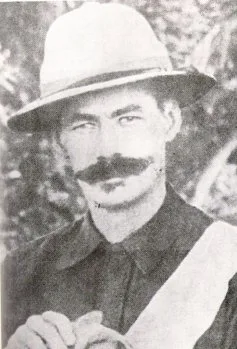
Sir Frank Athelstane Swettenham
The strangers later traveled to the upper reaches of Perak, and not long after, only three returned, claiming that the tiger had been killed. They had previously pleaded with the village headman to bury the tiger as if it were a human. In a different incident, there was a story about several Kerinchi men who appeared and sought shelter in a Malay home. Unfortunately, that night, several chickens went missing, and tiger paw prints were found in the coop area. A few days later, one of the guests staying at the Malay house fell ill and vomited chicken feathers.
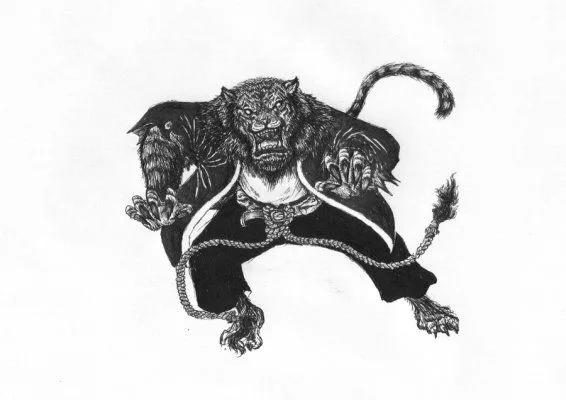
*illustrative image
The question remains: does were-tiger magic truly exist? It is said that this magic is often misused by its practitioners. To acquire this knowledge, it must be inherited from a predecessor before they pass away. If this magic is passed down through generations, it clearly falls into the category of 'saka' (ancestral spirits). Practicing sorcery, black magic, or deviant arts is considered an act of 'shirk' (polytheism) in Islam. Practitioners of such arts often find it difficult to take their final breath if the magic is not cast off before death. It is possible that such stories were merely fabricated to deter others from disturbing crops or to ensure the safety of those claiming to possess such powers. In the old days, there were also many tigers roaming freely through villages, especially at night.
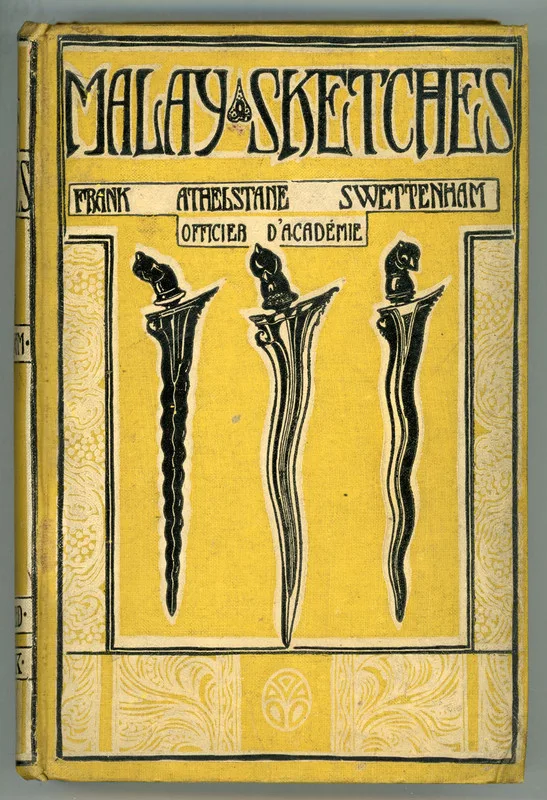
Malay Sketches book
Touching on stories other than those mentioned by Sir Frank Swettenham in his book, the author recalls an oral tale told by my late grandmother regarding a midwife who lived in Chenderong Balai. My late grandmother was also of Kerinchi descent, and according to her, there was once a midwife in Kampung Chenderong Balai from the Kerinchi lineage who possessed the power to become a were-tiger. To make a long story short, one night, a woman who was heavily pregnant went into labor. The woman's husband pedaled his bicycle as fast as he could to reach the midwife's house, which was located quite far from their village. Upon arriving, he called out to the midwife and told her that his wife was in labor and requested her help to deliver the baby. The husband then invited the midwife to ride on the back of his bicycle so they could reach the house quickly. However, the midwife told the husband to return home first, claiming she needed to prepare her birthing equipment. The husband complied and hurried home, worried about his beloved wife's condition. When the husband arrived home, he was shocked to find that the midwife was already there and had safely delivered his baby. Could the midwife have used her powers to reach the woman's house so quickly? Only God knows. That is one of the stories I still remember, just as my late grandmother told it. Sources and references:
- Malay Sketches by Sir Frank Athelstane Swettenham (p. 290)