Sultan of Perak 33, Sultan Idris Shah II
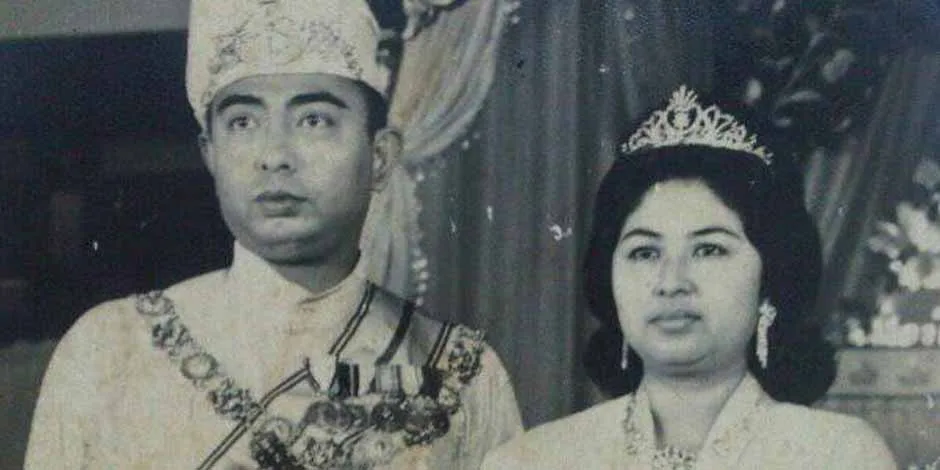
For those who lived through the 70s to the early 80s, the services and memories of the late Sultan Idris Shah II, the 33rd Sultan of Perak, will certainly not be forgotten.
This time, orangperak.com would like to share the life story and the immense contributions the late Sultan made to the people of Perak throughout his reign, as a memory for us all. May these memories remain with us forever. The late Sultan Idris Shah II was the eldest son of the 30th Sultan of Perak. His mother was Raja Perempuan Kelsom and his father was
Sultan Iskandar Shah
who had been the Sultan and Ruler of the State of Perak Darul Ridzuan for six years (from 1918-1938) when Raja Idris was born at dawn on August 15, 1924, at Istana Negara (now Istana Iskandariah) near Bukit Chandan, Kuala Kangsar.
He began his education at Clifford School Kuala Kangsar and later continued his secondary studies at the Malay College Kuala Kangsar. However, his Senior Cambridge studies at the Malay College were interrupted when the Japanese invaded Malaya in late 1941. In 1944, when the Pacific War no longer favored the Japanese, Raja Idris, with encouragement and spirit from the late Sultan Abdul Aziz, who was also his uncle, joined the Giu Tai, a volunteer force established by the Japanese to form a defense in Malaya to resist the re-conquest of Malaya by the Allied Forces. The main purpose of him joining
Giu Tai
was to secretly provide weapons to as many Malays as possible so that when the Allied Forces began their attack on the Japanese in Malaya, the Malays would take up arms in an effort to defeat the Japanese occupiers themselves. For some time, Raja Bendahara Idris and several other Malays were in contact with officers from Force 136. Among these officers was Lieutenant Colonel Datuk Peter Dobrée, who had parachuted secretly into the jungles of Hulu Perak to assist the Allied Forces' attacks and provide instructions to
Giu Tai
so that their cover would not be blown. The Japanese, through their own intelligence, felt deep suspicion towards the late Sultan Abdul Aziz and several members of the Perak royal family, sensing that some among the royalty were in contact with Force 136. Consequently, the Japanese placed Sultan Abdul Aziz and his 'aide-de-camp' (ADC), Raja Amir bin Raja Razman, as well as several other dignitaries, under house arrest within the palace and stationed Japanese officers to monitor the movements of these dignitaries at all times. The plan for an armed conquest of Malaya by the Allied Forces was eventually canceled when the Japanese surrendered following the atomic bombings of Hiroshima and Nagasaki in 1945. Raja Bendahara Idris later served as the State Secretary in 1946.
aide-de-camp
The plan for an armed conquest of Malaya by the Allied Forces was eventually canceled when the Japanese surrendered following the atomic bombings of Hiroshima and Nagasaki in 1945. Raja Bendahara Idris later served as the State Secretary in 1946.

In 1934, he obtained his first titled royal position when he was appointed as Raja Di-Hilir Perak following the passing of
Raja Sir Chulan ibni Almarhum Sultan Abdullah II
. Four years later, when his father passed away, he was appointed as Raja Bendahara during the reign of the late Sultan Abdul Aziz. In 1948, Raja Idris was appointed as Raja Muda during the reign of the late Sultan Yussuf Izzudin Shah. A year later, upon the advice of Dato’ Panglima Bukit Gantang Wahab, who was the Menteri Besar of Perak, and the High Commissioner of the Federation of Malaya, Sir Henry Gurney, Raja Muda Idris left for England to pursue higher education. Raja Muda Idris continued his studies for two years in local government, social welfare, and economics at the University of London. He then served at the Oxford District Council and the Burlington Rural District Council before returning to Malaya in 1951 to undergo military training in the Malay Regiment, where he was subsequently commissioned as a lieutenant. After completing his military training, Raja Muda Idris was named an official member of the State Executive Council, where he served until 1958. During this period, he attended various councils and traveled to visit the interior areas of Perak as a government official. Even after becoming the Sultan of Perak, he often received attention for the spirit and strength he displayed in carrying out his duties. Among the official positions he held was Colonel-in-Chief of the Royal Engineers Regiment. When he held the title of Raja Muda of Perak, he resided at the Istana Raja Muda in Teluk Intan, Perak. Raja Muda Idris also served as a member of the Dewan Negara Perak, a body that appoints titled royals and Malay dignitaries, and advises the Sultan on matters concerning the Perak throne. In recognition of his services to the state of Perak, Raja Muda Idris was chosen to receive the British honor of Companion of The Most Distinguished Order of Saint Michael and Saint George (C.M.G.) from Queen Elizabeth II in 1953.
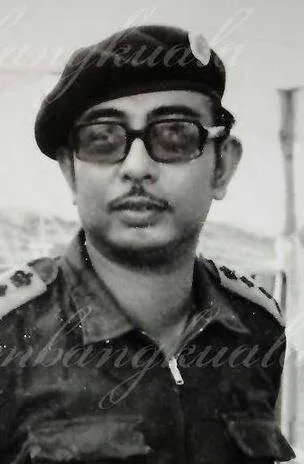
As the health of the late Sultan Yussuf Izzudin declined, Raja Idris, in his capacity as Raja Muda of Perak, had more duties and responsibilities to fulfill, and he often represented the Sultan at official ceremonies and the Conference of Rulers. During the final days of the late Sultan Yussuf, Raja Muda Idris was always present at Istana Iskandariah in Bukit Chandan. On January 5, 1963, the late Sultan Yussuf passed away, and two days later, before the royal coffin was brought out of the throne room, Raja Muda Idris was proclaimed the 33rd Sultan of Perak by the Orang Kaya Bendahara Seri Maharaja Perak, Dato’ Che Mohamad Yusof bin Sheikh Abdul Rahman. He took the title Sultan Idris Al-Mutawakkil Alallahi Shah and was 39 years old when he ascended the Perak throne. The coronation ceremony of Sultan Idris was considered historic as it was the first time the common people held and carried the power of the Bendahara since 1780. As was his habit since becoming Raja Di-Hilir in 1934, Sultan Idris Shah II was always close to the people. He easily mingled with the public without being bound by strict palace protocols, especially with those living in rural and remote areas. His friends were not only influential and wealthy people like the Shah of Iran, but also ordinary people living simple lives. On August 4, 1976, Sultan Idris inaugurated Kampung Ganda Temenggor, following the construction of the Temenggor Dam which submerged the old village. The Temenggor Hydroelectric Power Station was inaugurated by Sultan Idris on September 19, 1979. In 1980, the name of Sekolah Menengah Dato Maharaja Lela Kampung Gajah was changed to Sekolah Menengah Dato Seri Maharaja Lela (SMDSML) during his visit to Kampung Gajah. In many of his visits, he enjoyed wearing camouflage military attire, complete with a pistol at his waist.
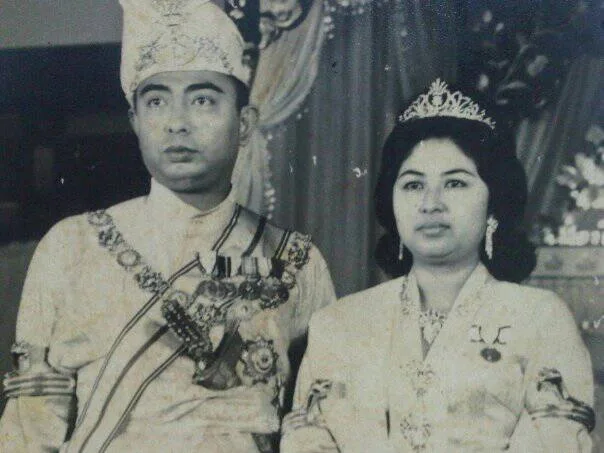
There were several interesting events throughout the late Sultan's reign. Among these was the fact that during his reign, the state of Perak celebrated Hari Raya Aidilfitri a day earlier than other states in Malaysia. In that year, 1983, only the states of Perak and Johor celebrated the festival early, and ironically, Sultan Idris Shah II and Sultan Iskandar of Johor were in-laws. In many of his royal addresses, Sultan Idris Shah II focused heavily on his aspirations and hopes to work for the people regardless of race or religion. He frequently traveled to every corner of Perak, and he personally witnessed the problems faced by the people, both Malay and non-Malay. Through the power he held, he often urged the government to bring development and upgrade infrastructure throughout Perak so that the people would always be happy and find it easy to carry out their daily lives. It was not surprising that he was among the Malay Rulers who led the opposition to the 1983 Malaysian constitutional amendments proposed by Prime Minister Datuk Seri (now Tun) Dr. Mahathir to limit the powers of the Yang Di-Pertuan Agong and the rulers, because for him, these amendments would limit his ability to get close to the people. Sultan Idris Shah II had various interesting hobbies, even though his official duties always kept him busy. Among the hobbies closest to his heart was painting. Tuanku had an interest in painting since his youth. He used watercolors during his school days and later switched to oil paints. When he traveled to England and Europe in 1949 and 1950, he spent much of his time visiting art galleries. His love for the sea was translated into two of his favorite works, which he completed upon returning from Europe. One of them was titled
Boat at Sea
which shows a boat heading to the shore, and another of his works depicted the beautiful scenery of Pulau Pangkor.
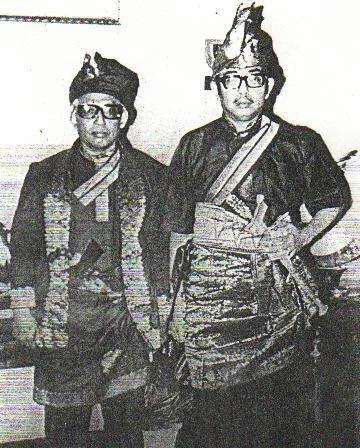
His love for the sea was not only translated through paintings. Like his father, the late Sultan Iskandar Shah, Sultan Idris Shah II loved driving boats and fishing. His love for the sea was also shared by his family members, namely his younger brothers Raja Mohamed and Raja Ahmed Sifuddin (later Raja Muda 1984-1987). Sultan Idris Shah II owned a boat named
Dunita
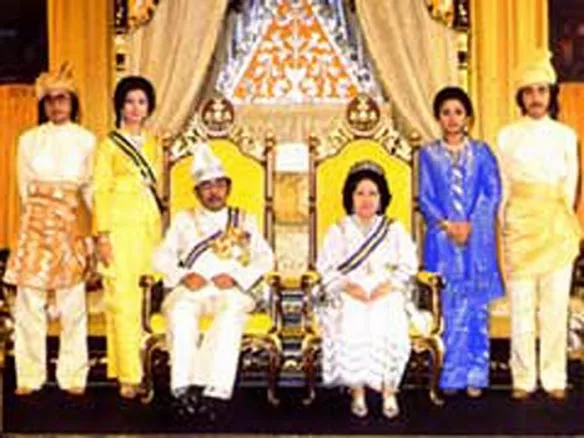
, named after Raja Nor Akma (Ku Duna) binti Raja Kechil Sulong Harun Al Rashid, who was the wife of his elder brother Raja Mohamed. On June 11, 1983, the Seri Andalan, a luxury boat owned by Sultan Idris, was launched at Lumut Port, Perak. Sultan Idris Shah II was also an amateur photographer and had his own darkroom where he could develop his own photo negatives. He also enjoyed riding high-powered motorcycles. The personal life of Sultan Idris also had its ups and downs like most people living in that era. In 1943, he married his cousin, Raja Puan Besar Raja Noor Izah binti Raja Ali, but they divorced 14 years later without having any children. Then, during the chaotic times of the Japanese occupation, he married Raja Muzwin binti Raja Ariff Shah (later Raja Perempuan). Raja Muzwin was only 15 years old at the time, and the royal couple was blessed with two sons and two daughters. The couple had another daughter, but she passed away at a young age. His children were Raja Izzuddin Iskandar, Raja Nazhatul Shima (Raja Puan Mahkota Perak), Raja Iskandar Zulkarnain (Raja Di-Hilir Perak), Raja Zarith Sofia (now DYMM Permaisuri Johor), Raja Jamil Ariffin, and Raja Radziatul Zahar (who died in infancy). Sultan Idris also had several other wives, including Amy Lim Kam Fong, who later used the name Aminah after embracing Islam, and subsequently held the title Che Puan Negara. Among his other wives were Che Asmah, Che Hanizah binti Abdullah (Annie Chin), Dato’ Seri Sharifah Salmah binti Syed Ahmad, Che Satira binti Abdullah (originally named Suteen, a woman of Thai descent), and Dato’ Seri Norizan binti Haji Hamzah. Sultan Idris had children from these marriages, totaling 13 sons and daughters, including the four sons and daughters from his marriage to Raja Perempuan Muzwin.
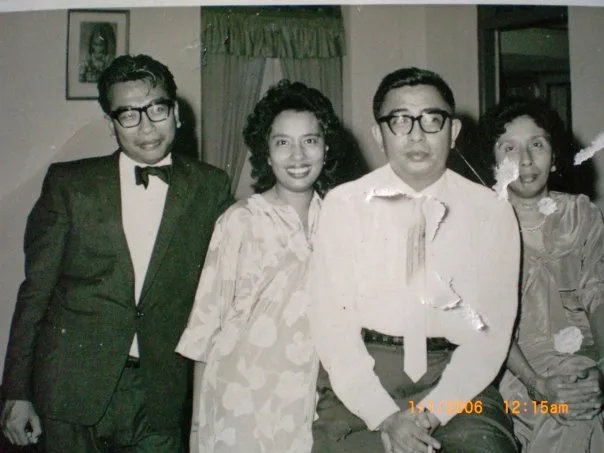
Sultan Idris Shah II was selected by the Conference of Rulers to become the eighth Yang Di-Pertuan Agong of Malaysia. However, by divine decree, on January 30, 1984, about a week before being elected by the Malay rulers as the Yang Di-Pertuan Agong, he passed away after suffering a heart attack at the Lumut District Hospital at 11:15 PM. The late Sultan was 59 years old at the time and had been the Sultan of Perak for 21 years. He was laid to rest at the Al-Ghufran Royal Mausoleum in Bukit Chandan and was given the title
Marhum Afifullah.
May Allah shower blessings upon his soul. Amen.