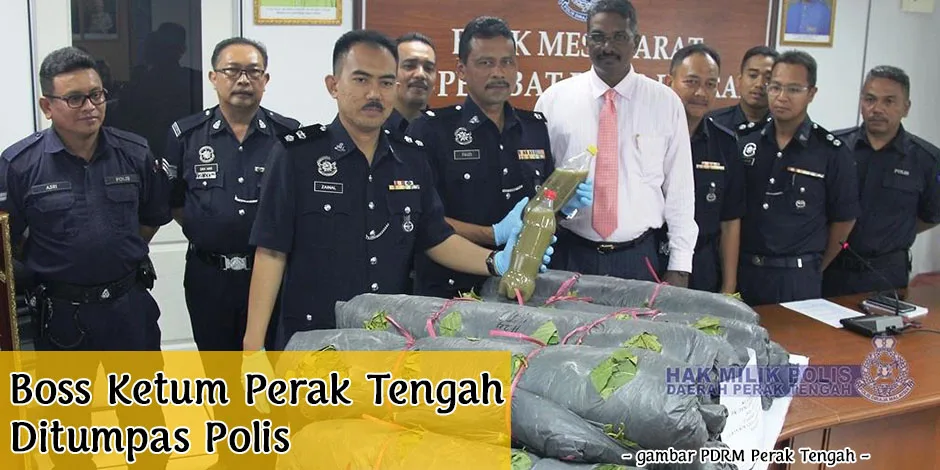
Perak Tengah 'Ketum Boss' Taken Down by Police
On May 15, 2017, at approximately 4 AM, four Perak Tengah police officers from the District Police Headquarters MPV patrol unit intercepted a suspicious car early that morning. The vehicle was a Mercedes Benz driven by a Malay man in his 30s. The individual was stopped on the road from Kampung Gajah to Teluk Memali, heading towards Teluk Intan.
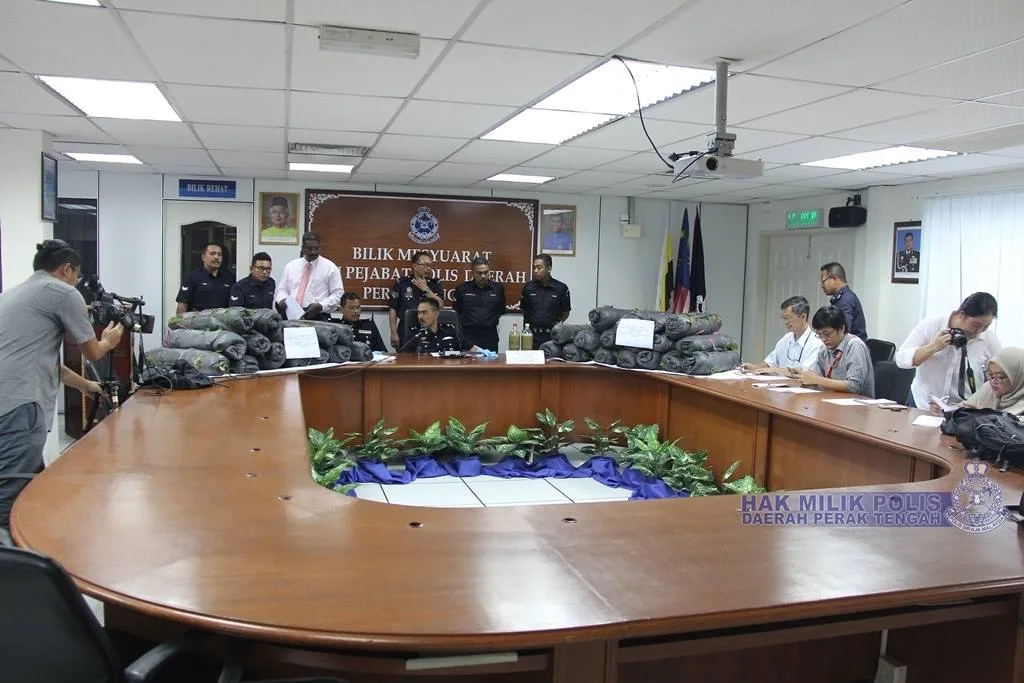
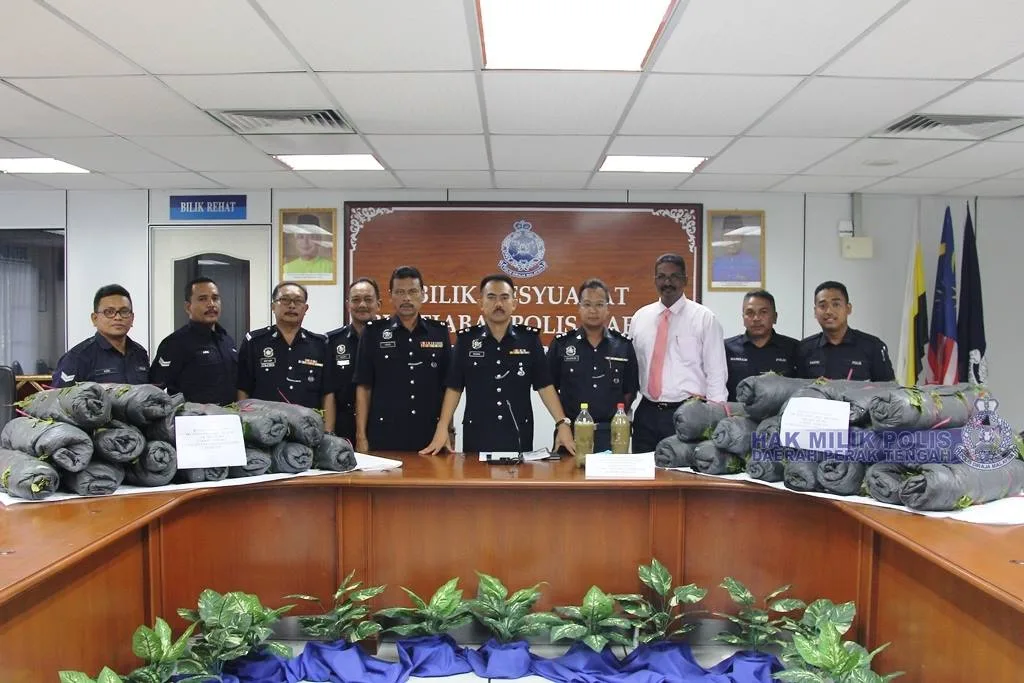
Following an inspection of the individual and the vehicle, police discovered 32 black plastic bags suspected to contain ketum leaves, weighing approximately 110 kg, along with 2 bottles containing 3 liters of liquid suspected to be ketum juice. Most of the items were found in the trunk of the Mercedes Benz.
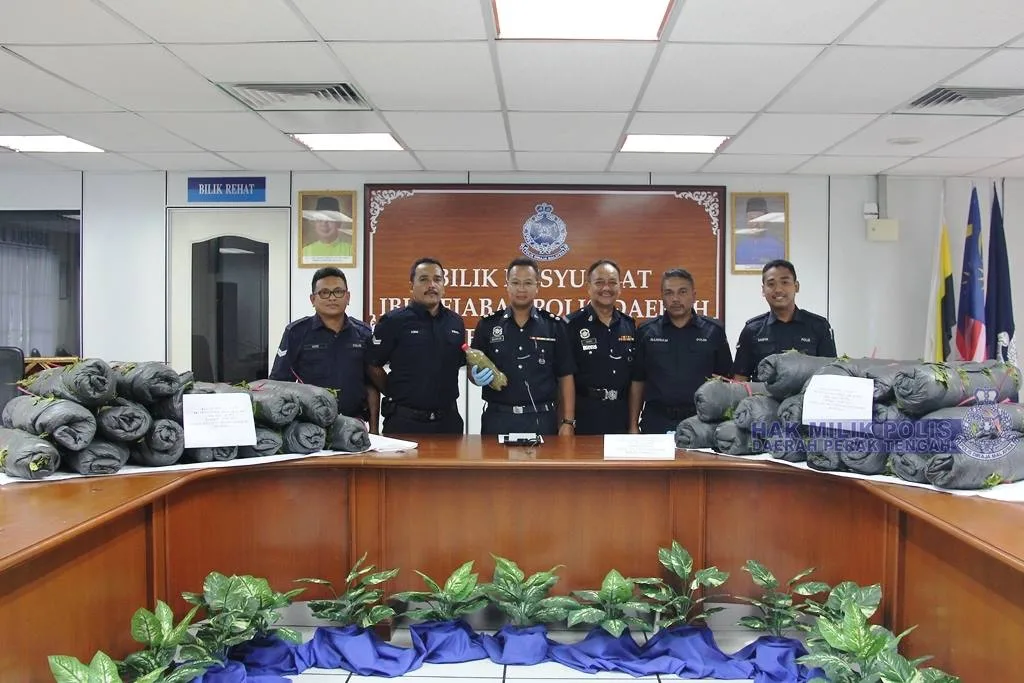
The police seized items with an estimated value of RM3,300. The Malay male suspect, in his 30s, also runs a catfish farming business and has been remanded for 2 days from May 15, 2017, to May 16, 2017, for further investigation. Below is some brief information about ketum for your basic knowledge if you are not familiar with it. The Ketum tree, also known as the Biak tree, is a plant from the Rubiaceae family that is actually abundant in Africa. Additionally, it can be found in the northern and central parts of Peninsular Malaysia as well as southern Thailand. In Thailand, this tree is called Kakuam, Ithang, or Thom, and in the United States, it is known as Kratom. Its botanical name is Mitragyna speciosa korth.
Ketum leaves have long been used in traditional medicine as an energy-boosting drink for women who have just given birth. The leaves are boiled and the water is consumed to restore energy. It is also used to treat flatulence and back pain. However, the boiled ketum leaf water
has been misused
and has begun to be sold widely to regular consumers. Ketum and its derivatives have been used for opioid withdrawal management by chronic opioid users. Data on how often it is used is scarce because it is not detected by standard drug screening tests. The Ketum tree became well-known in early 2003 because it is said to be addictive due to its mitragynine content. Mitragynine was listed in the Third Schedule of the Poisons (Psychotropic Substance) Regulation 1989, Poison Ordinance 1952. Consequently, the Ketum tree was declared a prohibited substance starting in January 2003.
For the information of our loyal readers at orangperak.com, such cases will be investigated under Section 30(3) of the Poisons Act 1952. If found guilty, suspects can be punished under Section 30(5) of the same act, and if convicted, they may be fined up to RM10,000.00, imprisoned for up to 4 years, or both.