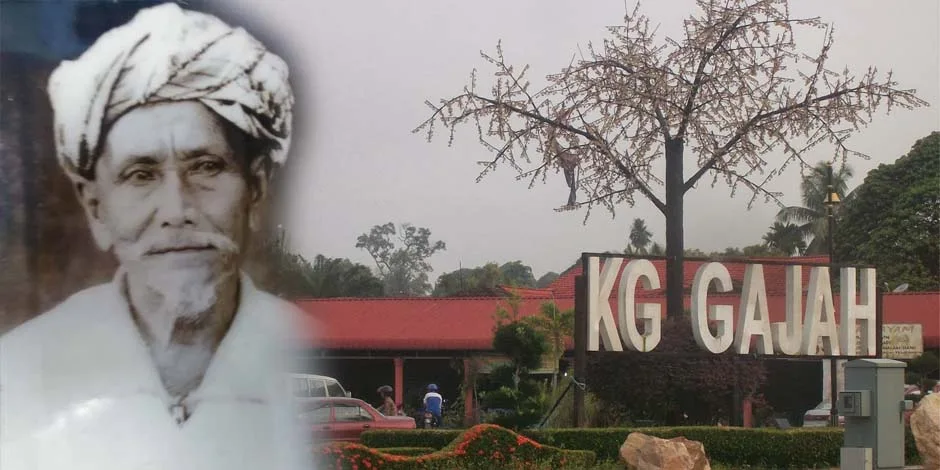
Pawang Jais, an Entrepreneur in Kampung Gajah in the 1890s
Pawang Jais, whose real name was Haji Mohd Jais bin Ali bin Hamid bin Imam Syawal bin Bilal Alang bin Tok Nojeh, was the third of five children. His life in his youth during that era was modest, much like everyone else's. He married Itam Mengganti binti Imam Kolah, also known as Hajah Rahmah (a name adopted after performing the Hajj in Mecca). Their union was blessed with six children: Basir, Mohd Johar, Zahidah, Anjang Saejah@ Rahmah, Abdullah Zahid, and Puteh Sareah. After marriage, Haji Jais began working diligently to support his family. Through his hard work and dedication, he earned the trust of various parties. He was well-known as the backbone behind the construction of irrigation canals for paddy fields in Kampung Gajah, as recorded by Cecil Wray, the Acting District Magistrate of Hilir Perak. "On 25 April 1895, I proceeded to Kampung Gajah at 7.30 am with Raja Musa, the Tok Penghulu, and several others to inspect the irrigation construction work being undertaken by the Tok Penghulu and Pawang Jais. The work is progressing smoothly. Once completed, it will supply water to a vast area that is now almost fully cultivated (paddy fields)."
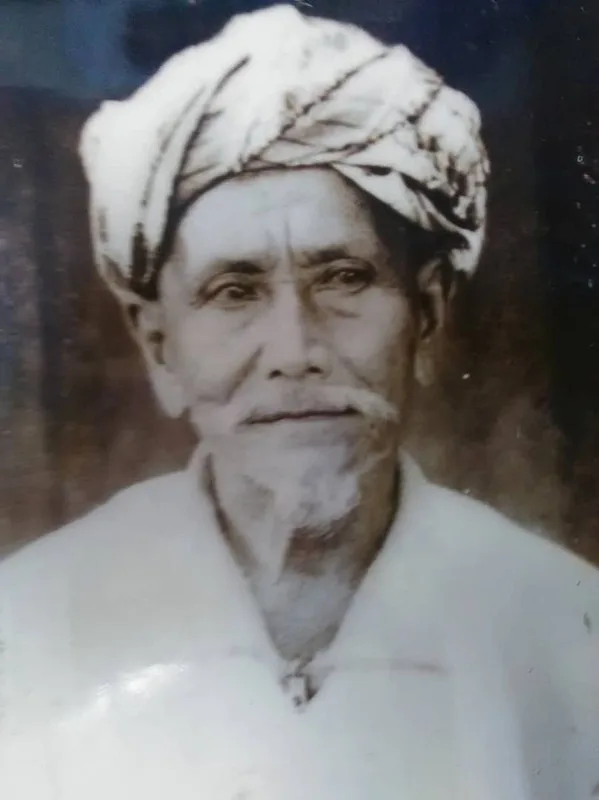
He also explored land and planted crops with potential at the time to increase his family's income, as recorded in a report by the Hilir Perak District Magistrate, Ed.J Brewster, on 10 June 1898. "I started upstream from the river on the same day and made a mukim visit to Kampung Gajah. I walked about four miles inland towards a new village opened by the most energetic Malay in the Perak River valley, named Pawang Jais. He is planting coconuts and Liberian coffee, and he has about twenty-five settlers with him. The area is high, and they say the soil there is fertile and suitable for coconuts." The Kampung Gajah, Pasir Salak, and surrounding areas in 1895 were in a recovery phase following the Perak War of 1875. The British began to reconcile with the Perak community twenty years after the war. This is evidenced by the fact that Anjang Abdullah, the third son of Dato Sagor, was appointed as the Penghulu of Kampung Gajah and Pasir Salak in 1905, even though the British Resident of Perak at the time was E.W. Birch, the son of J.W.W. Birch, who was assassinated in Pasir Salak. Rubber began to be planted on a large scale in Perak around the 1890s. According to the oral history of Haji Jais's family, a British researcher studying the flora and fauna of Perak provided rubber seeds to Haji Jais. The British researcher urged Haji Jais to plant rubber on a large scale in Kampung Gajah. The suggestion was well-received by Haji Jais, and he began planting rubber over hundreds of acres in Changkat Taboh. The rubber plantation provided him with very lucrative returns at the time. Mohamed Jabar, or Ngah Jabor, a tin mining entrepreneur in Kampar, returned to Kampung Gajah after spending a long time in Kampar. Coincidentally, at that time, he had received 200 acres of land from the Perak state government. He met with Haji Jais to seek guidance and advice on planting rubber on his land. They became friends and later became in-laws when Mohamed Jabar arranged for his daughter, Itam Hajar, to marry Basir, the son of Haji Jais.
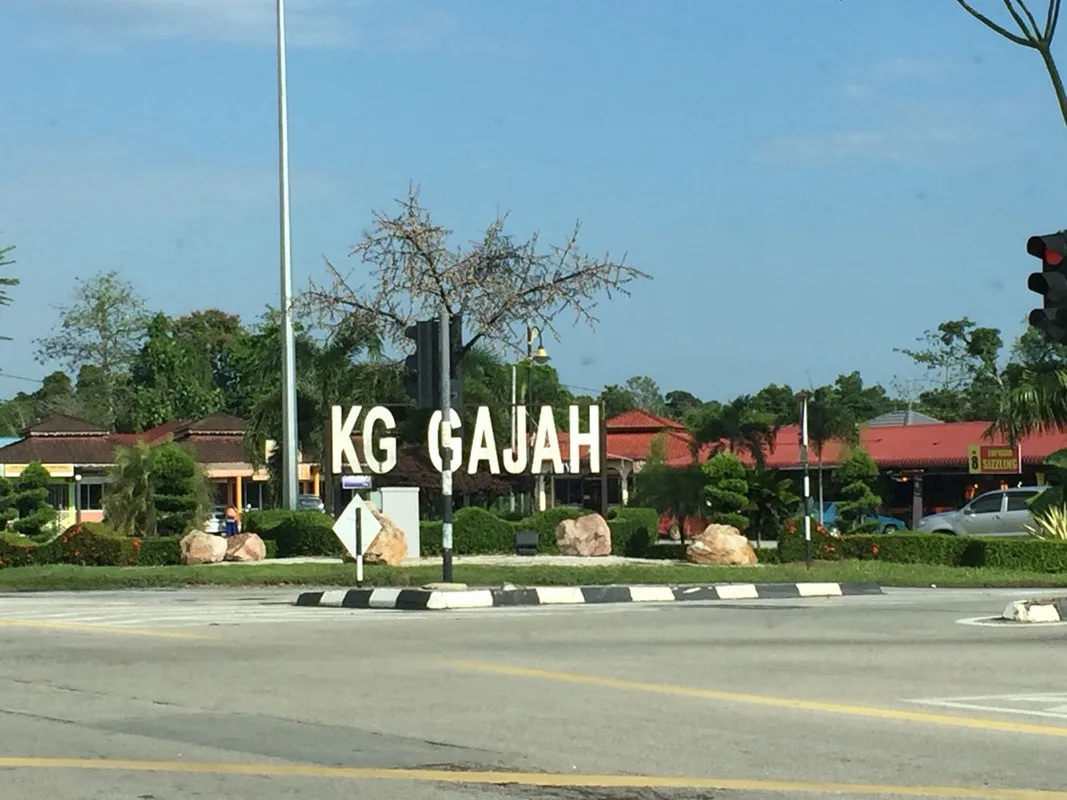
The income from the rubber, which was quite substantial at the time, allowed Haji Jais to contribute his wealth to build a mosque in Kampung Tengah together with the Kampung Gajah community in 1910. This mosque is now known as the Old Mosque of Kampung Gajah. Additionally, he also established a surau around the 1930s known as Madrasah Jaiziyah. This surau served as a basic education center for young children in Kampung Gajah before they continued their studies to higher levels elsewhere. The surau was managed by his son-in-law, Haji Abdul Hamid bin Abdul Latif, a graduate of Pondok Sungai Dua, Pulau Pinang. After decades of service and contribution to the economic and social welfare of the Kampung Gajah community and its surroundings, Haji Jais, or Pawang Jais, passed away in 1948. Source:
- Haji Md. Shaharudin bin Mansur, Part of the Tok Nojeh Family Lineage from Changkat Tuntung, Mukim Pulau Tiga, 17th Century, January 1977
- Hashim Sam, Royal Commoner, The Life and Times of Imam Perang Jabor (1858-1921)
- Malaysian Historical Society, 2000