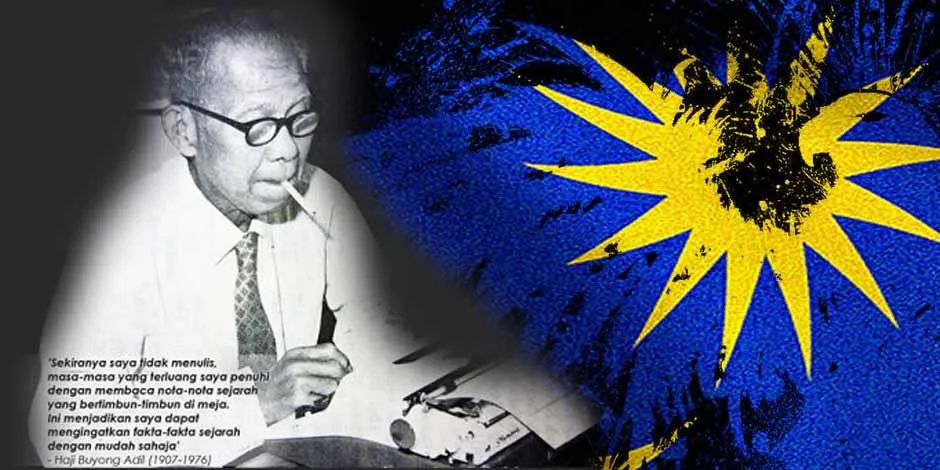
Haji Buyung Adil, A Perak-Born National Historian
History is an event that must be known and studied to inspire us to achieve success and avoid repeating past mistakes.
This time, orangperak.com would like to invite readers to get to know a prominent national historian born in Teluk Intan. Although he has long since left us, his works and efforts in the field of historical research allow us to better understand the history of our ancestors. This national historian is Cikgu Haji Buyung Adil. Cikgu Buyung was born into a family of Rao descent in January 1907 in Teluk Intan, Perak. He received his early education at the Teluk Anson Malay School before entering the Sultan Idris Training College (SITC), Tanjong Malim in 1924. While studying at SITC, he was selected as the best student and won a cash prize of RM200. However, around 1936, the seeds of anti-colonialism began to sprout at SITC. The spirits of the trainee teachers there were ignited with a surge of nationalism by several lecturers such as Ahmad Bakhtiar, Harun Aminur Rashid, and Pendeta Za’ba. As a result, a spirit of nationalism was born among Malay teachers such as Ibrahim Haji Yaakob, Ahmad Murad Nasaruddin, Ngumba (Dato’ Embong Yahya), Muhammad Yassin Makmur (Pungguk), Mohd Isa Sulaiman, Senu Abdul Rahman (the late), Ghaffar Baba (Tun), and not forgetting Cikgu Buyung. It was also at SITC that Cikgu Buyung began to dabble in writing. In his early stages of writing, he mostly wrote short stories and poems themed around nationalism—a theme that was very intimate with the situation at SITC, which was increasingly burning with the fervor of national spirit. However, his writing style shifted to the historical genre after becoming an assistant to Cikgu Abdul Hadi Hassan, a history teacher at the educational center. His interest in history began to be cultivated and nurtured throughout his time at SITC. When Cikgu Abdul Hadi transferred to Kelantan, that interest continued until he was able to produce historical works in book form. Cikgu Buyung once attended a Japanese teacher training course at the Tokyo Shihan Gakko school located in Kajang, Selangor, during the Japanese occupation of Malaya. After the Japanese left Malaya and the British took over the administration of Tanah Melayu, he was appointed by the British Military Administration (BMA) as a headmaster in Ipoh. While in Ipoh, he was active in the Perikatan Melayu Perak (PKP) organization. However, on February 22, 1948, the PKP was officially dissolved to make way for the establishment of the first UMNO branch in Perak. In its general meeting held at Madrasah Paloh, Ipoh, Cikgu Buyung was appointed as the Information Officer for UMNO Perak, while the late C.M. Yusof Syed Abdul Rahman was elected as the President of UMNO Perak.
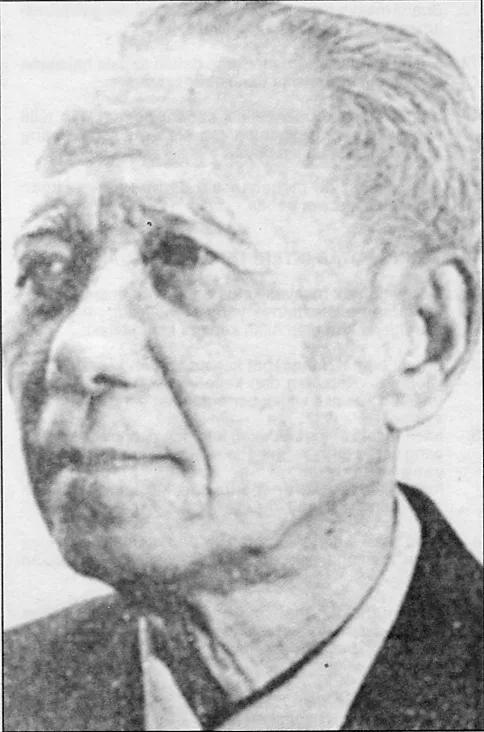
His activities in opposing the British while in Ipoh were not well-received by them, so on March 1, 1950, the British government appointed him as the Head of Malay School Broadcasts for Radio Malaya, which was then based in Singapore, to curb his activism in UMNO. However, his nationalist spirit was so strong and firm that in the Lion City, he instead became a member of the Singapore Malay Teachers' Union (KGMS). Through KGMS, his anti-colonial activities expanded until Cikgu Buyung was involved in organizing a meeting at the Kota Raja Club to establish the Malay Language Board (LBM). This board was established on October 2, 1950 (two months after the establishment of ASAS 50) because it wanted to control, improve, expand, enrich, and develop the Malay language. An interesting fact about the list of LBM committee members is that it consisted of political figures with a nationalistic spirit. Among them were Dr. Burhanuddin al-Helmi (President), Abdul Rahman Haji Said and Cikgu Buyung (Vice Presidents), Mahmud Ahmad (Secretary), Hamzah Hussein (Assistant Secretary), and Amir Haji Lana (Treasurer). Indeed, his nature was always to fight against the British wherever he traveled or resided. Cikgu Buyung was a diligent worker, an avid reader, and a meticulous note-taker. According to the National Laureate, Dato’ Abdullah Hussin, the late Cikgu Buyung always wrote notes on small pieces of paper and was diligent in keeping newspaper clippings as references for his writing. He even filed information on many things, including his car affairs, very completely. Based on the experience of SN Abdullah Hussin with Cikgu Buyung, the late scholar was a good "reference book" if he ever hit a dead end regarding a date, for example, the sinking of the ship "The Flame," which was rumored to have carried many Malay literary works from the Nusantara. Without looking at a book, Cikgu Buyung could state the exact date the ship sank and how far it was from the coast of Bangkahulu, Indonesia. The late scholar served the government, particularly the Ministry of Education, for about thirty years and retired in 1962. However, after retiring, he was appointed as a member of the Singapore Public Service from 1963 to 1969. Around 1964 to 1970, he was active in compiling history books even though he was already in his sixties. These books include Sejarah Johor, Sejarah Selangor, Sejarah Perak, and Sejarah Pahang, all published by Dewan Bahasa dan Pustaka (DBP). However, his early works were written in 1939 while at SITC, namely Sejarah Alam Melayu Penggal IV and Sejarah Alam Melayu V. In 1970, he helped the late Tan Sri Senu Abdul Rahman complete the book Revolusi Mental, and it was during this time that Cikgu Buyung was invited by Tun Abdul Razak Hussein (the 2nd Prime Minister of Malaysia) to work at DBP. In 1971, Cikgu Buyung began working at DBP as a History Researcher and continued writing history books on the Malay states such as Sejarah Sarawak, Sejarah Perlis, Sejarah Negeri Sembilan, Sejarah Melaka, Sejarah Kedah, Sejarah Terengganu, and Sejarah Kelantan, in addition to writing fiction for children. While at DBP, he also had the opportunity to complete a book titled Perjuangan Orang Melayu Menentang Penjajahan Abad ke-15 hingga 19, which was published by DBP in 1983 after Cikgu Buyung had passed away. His love for history was profound. For him, history should be crowned as a core subject in a country's education system because to understand the civilization of a nation, there is no other primary element but history. History does not actually die. It lives as long as humans want to use history as a lesson that never fades. When faced with a crisis, history will teach us how to find the meaning of a solution. To commemorate his service, the Ministry of Education named a secondary school in Tapah after him, Sek. Men. Buyung Adil, in the 70s, and that name remains to this day. Indeed, this prominent historian and educator has left behind a mountain of historical works for the reading and viewing of his people. This national historian passed away in 1976 at the age of 69. Al-Fatihah to the late scholar.