Getting to Know Dato Panglima Teja in Perak History
In the old days at Kuala Teja near Kota Baharu in Gopeng, there lived a dignitary titled Dato Panglima Teja. This implies that every district or territory within the land of Perak surely had its own dignitaries that we have not known about until now.
When referring to a dignitary, it also means there was certainly a Ruler who held power over the district or territory occupied by that Ruler. However, what is certain is that no matter how many rulers of royal blood or descent there were, the greatest Ruler was the one who governed the whole of Perak. If we observe and reflect for a moment on the system practiced by the old Sultanate, it reveals a system of government based on consensus. It is no wonder that once upon a time, this Malay land was famous throughout the corners of the globe, where the Malay empire was so strong due to the unity formed by the system from the leadership of the Malay sultanate itself, which simultaneously shaped the local economy. It is no wonder that the Malays of the past were mostly well-to-do.
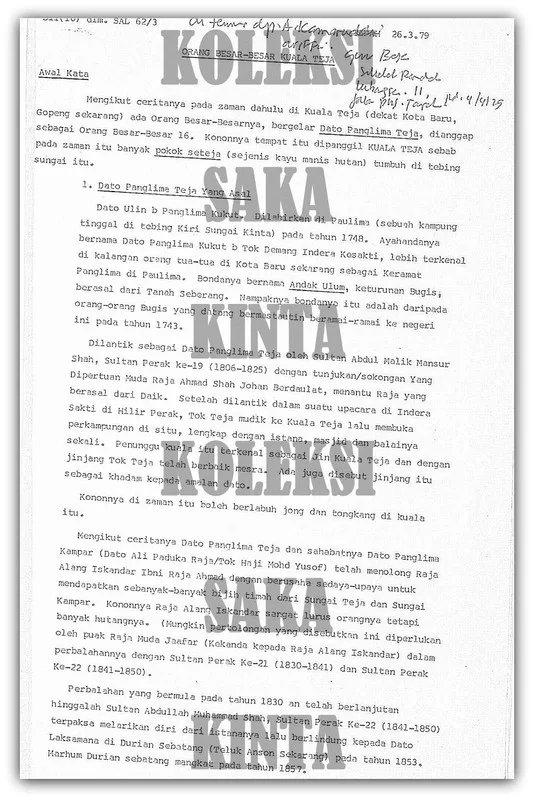
Returning to Kuala Teja, the name Kuala Teja is said to have originated from a type of tree called by the locals as the Seteja Tree. It is said that at that time, these Seteja trees grew in abundance on the riverbanks there. The first dignitary to hold the title of Orang Kaya-Kaya Besar Raja Mahkota Dato’ Panglima Teja was Dato’ Ulin B. Panglima Kukut. Dato’ Ulin was born in 1748 in Paulima, Perak. Perhaps not many know where the place mentioned earlier is. Paulima is a deserted village located on the left bank of the Kinta River. His father was named Panglima Kukut b. Tok Demang Indra Sakti, or better known as Keramat Panglima Paulima. Dato’ Ulin was appointed as Dato’ Panglima Teja, a hereditary position, by Sultan Abdul Malik Mansur Shah, the 19th Sultan of Perak, in 1806 with strong support from the Yang DiPertuan Muda Raja Ahmad Johan Berdaulat Ibni Al-Marhum Raja Sa’ad, the Sultan's son-in-law who hailed from Daik. This Raja Ahmad was the one called Tok Perak, who renounced his title and left for Pahang because he was disappointed that his family had been slandered. His memorial tomb is located in a place on the banks of the Perak River between Teluk Intan and Kampung Gajah.
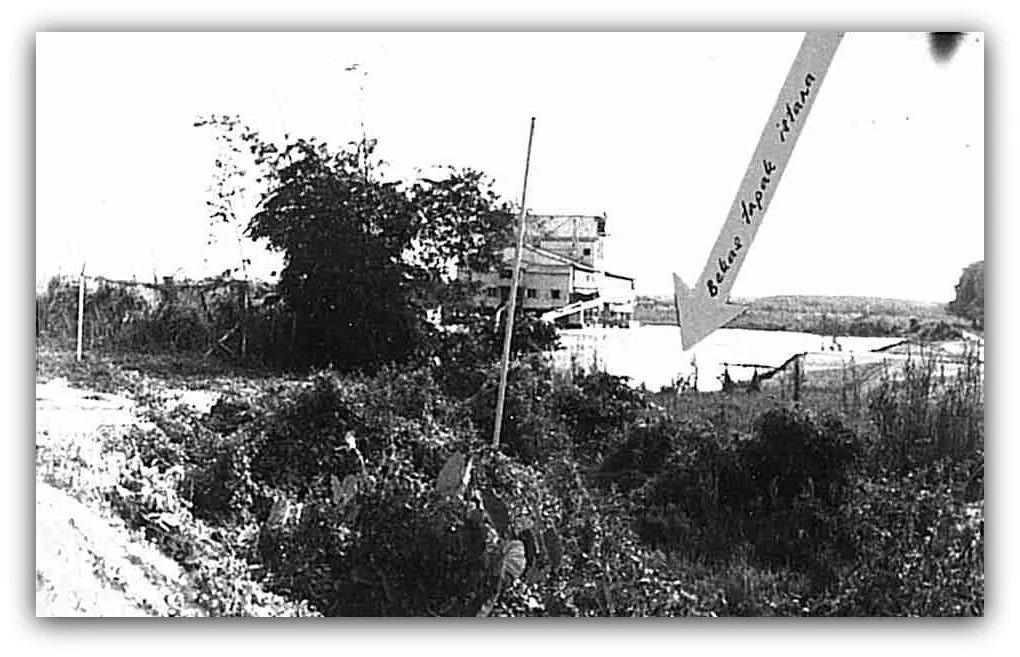
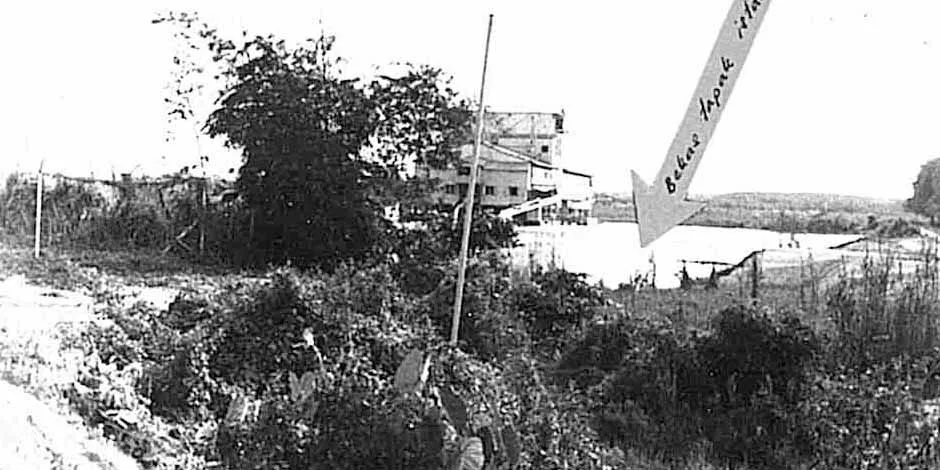
Teja Palace Site
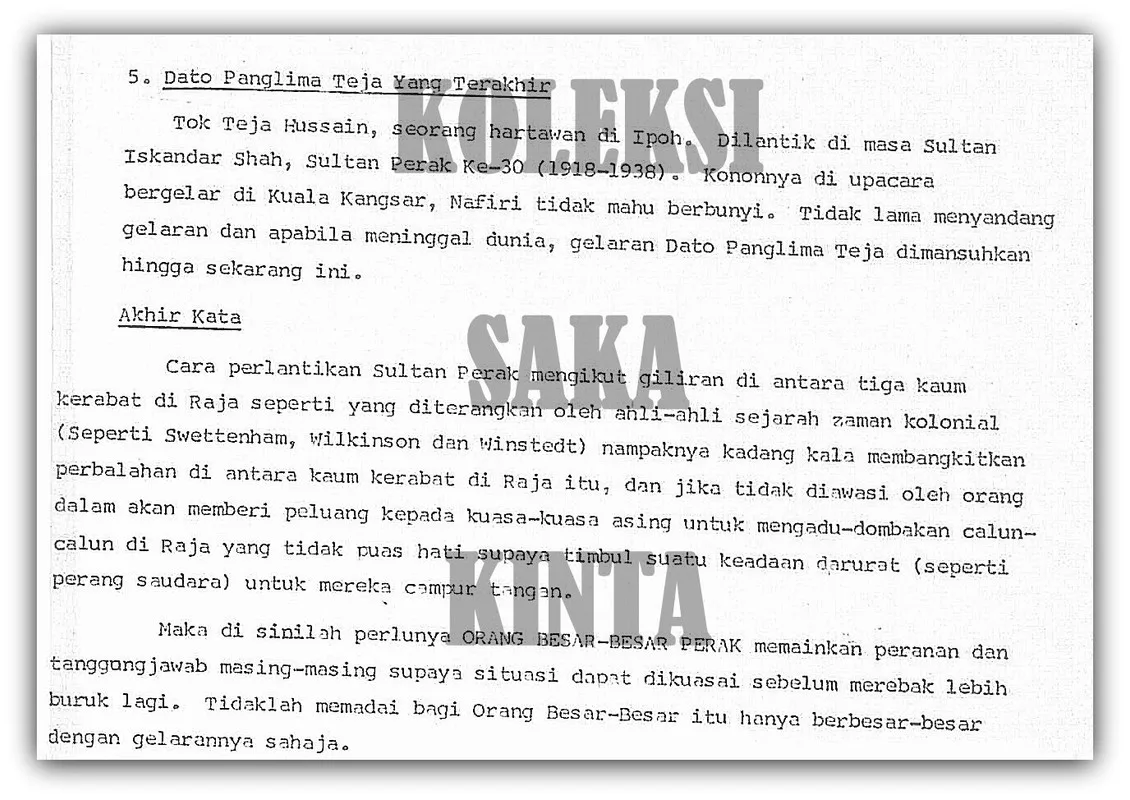
After Tok Teja was appointed in a traditional ceremony at Indra Sakti, in lower Perak, Tok Teja traveled upstream to Kuala Teja to open a village there and completed his palace, complete with a mosque and a hall. This was because Tok Teja was also of royal descent. The guardian of the estuary was known as the Jin of Kuala Teja, and it is said that Tok Teja had a friendly relationship with the spirit. The spirit was a companion (kadam) to Tok Teja. During that era, Kuala Teja was a place where Jongs and barges traveling upstream would dock. According to stories, Tok Teja and his friend, Dato Panglima Kampar, namely Dato Haji Mohd Yusof, once worked together to help find tin ore to assist Raja Alang Iskandar in helping his elder brother, Raja Jaafar, who was in conflict with the 21st and 22nd Sultans of Perak. The conflict occurred in 1830 and continued, forcing Sultan Abdullah Muhammad to flee and seek protection from Dato’ Laksamana of Durian Sebatang (now Teluk Intan). According to several sources from the elders, the position of Dato’ Panglima Teja was also once contested, much like the position of Dato’ Panglima Kinta. Dato’ Laksamana Hussien, a wealthy man in Ipoh, was said to have held the position. It was told and witnessed by people that during the ceremony where the title was changed in Kuala Kangsar, the Nafiri (royal trumpet) refused to sound at all. However, he still insisted on holding the title. Not long after holding it, it is said he fell ill and died. After that, the title of Dato’ Panglima Teja was abolished and did not return to the heirs. In conclusion, sometimes explanations by colonial historians can spark conflict among relatives, and if not monitored, can provide opportunities for incitement over dissatisfaction, which could lead to an emergency. This is where the role of the Perak dignitaries is to play their respective roles and responsibilities, and not just be good at acting important because of the titles they wear.
Like a person with bound elbows, Like a child being fed, Close by but unreachable, Already eaten, still craving more.
One step moves, then starts to shift, Once shifted, then take action, Blessed are those who are diligent and active, Not refusing the burden on their shoulders.
Meeting a wedge with a chisel, The wedge is held by a donkey, Like a rooster with spurs, The wise are tested and endure.
What is dug that cannot be pried? Ignorance makes one blame the tool, Impossible work will never succeed, Using ink to make chocolate.
Like a fish poisoned by tuba root, The body has no strength to try, Capital is gone with no profit, Demands come, leaving one in debt.
-tokchangkatlanggor-