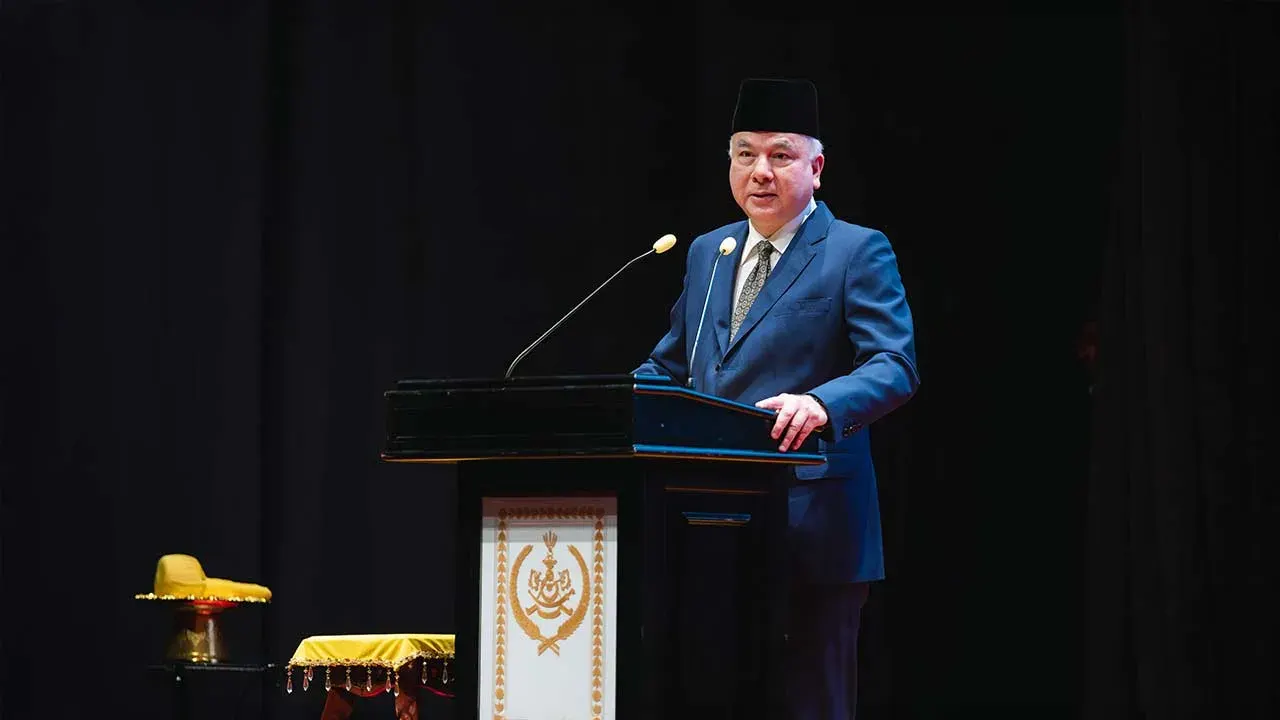
Sultan Nazrin: Islamic Finance Has Potential to Become a Key Driver for Global Sustainable Investment
Sultan Nazrin views Islamic finance principles as capable of leading sustainable investment through sukuk, waqf, and financing that creates a positive environmental impact.
Efforts to address climate change and build a more resilient economy require significant amounts of capital. In this context, Islamic finance and sustainable investment are seen as having ample room to move in tandem, especially as the world increasingly focuses on funding sources that not only pursue profit but also consider the impact on society and the environment.
The Sultan of Perak, Sultan Nazrin Muizzuddin Shah, stated that the principles of Islamic finance are capable of leading sustainable investment efforts as the world strives to mobilize capital to address the challenges of climate change. This view was conveyed through a special address at the 17th Securities Commission Malaysia and Oxford Centre for Islamic Studies Roundtable in the United Kingdom.

According to His Royal Highness, the transition to a more sustainable future cannot rely solely on public funds. Private capital is also needed, but appropriate approaches and regulations are essential to ensure these funds are not focused solely on short-term investments.
Islamic Finance Capable of Supporting the Sustainable Investment Agenda
Islamic finance has a compelling foundation in the context of sustainable investment because it links financial activities with real economic activities. This approach emphasizes the use of capital for productive and beneficial purposes, while encouraging risk-sharing among the parties involved.
This concept is closely related to the needs of today's world, which increasingly demands that investments take into account economic, social, and environmental impacts. Investors are no longer looking only at the amount of profit that can be obtained, but are instead considering how a project impacts society over the long term.
Sultan Nazrin views these fundamental characteristics of Islamic finance as an advantage that can be leveraged to strengthen the sustainable investment agenda. At the same time, His Royal Highness emphasized the need for the financial industry to be bolder in innovating and considering risks related to climate change.
Private Capital Essential for the Future of the Green Economy
The transition to a lower-carbon economy requires massive investment. The government has a key role in providing policies and infrastructure, but the capacity of the public sector alone is insufficient to finance all these requirements.
The private sector must play its part by channeling capital to projects that have economic potential while benefiting the environment and society. However, investment decisions must be made by considering long-term impacts, rather than just short-term gains.
In this regard, Islamic finance principles can be an approach to encourage more responsible use of capital. The link between financing and real economic activity also opens up space for the development of projects that provide clearer benefits to society.
Sukuk Can Be an Instrument for Financing Sustainable Projects
One of the instruments that can be used in efforts to expand sustainable financing is sukuk. This Islamic capital market instrument can be used to raise funds for various projects and activities that meet specific financing needs.
In the context of sustainable development, sukuk structures can be designed to support projects related to clean energy, resilient infrastructure, water resource management, and other sectors that benefit society.
Sultan Nazrin also urged for sukuk structures and other financing mechanisms to be further developed to help protect the environment. His Royal Highness emphasized the importance of an approach that prioritizes real impact, rather than just commercial convenience.
Waqf Has Greater Potential
Besides sukuk, waqf also has room to be developed as part of a financing ecosystem that benefits society. The concept of waqf is fundamentally linked to the ownership or use of assets for charitable purposes and long-term benefit.
With modern management approaches, waqf assets have the potential to be used in various economic and social activities. The expansion of waqf-based financing mechanisms can also help create alternative funding sources for projects that benefit the community.
In the context of modern Islamic finance, the development of more innovative waqf structures requires collaboration between regulators, financial institutions, waqf managers, the private sector, and other stakeholders. Discussions regarding waqf innovation are also part of efforts to strengthen the Islamic finance ecosystem.
Responsible Investment Becoming Increasingly Important
The financial world is now paying more attention to the concept of responsible investment. Investment decisions are no longer viewed solely from the perspective of financial returns because environmental, social, and governance (ESG) factors are increasingly influencing how investors evaluate opportunities.
This approach shares similarities with several values that have long existed in Islamic financial traditions. Among them are the need to avoid harmful activities, linking finance to real economic activity, and considering the principles of justice and risk-sharing.
Securities Commission Malaysia also continues to focus on the development of the Islamic capital market and value-based approaches. These efforts include research, innovation, talent development, as well as the application of ethical considerations and risk awareness in Islamic financial practices.
Clean Technology Needs Capital Support
Sustainable investment is not just about financial institutions. It is also closely linked to the development of technology and innovation that can help solve environmental challenges.
Sultan Nazrin touched on developments in clean energy technology, efficient agriculture, water management, and resilient construction. These sectors require sufficient capital so that the innovations produced can be scaled up and utilized on a larger scale.
When financing can be channeled to projects with economic potential and environmental benefits, it can help accelerate the transition to a more resilient economy. In this situation, Islamic finance has the opportunity to play a greater role in supporting sustainable technologies and projects.
Climate Risks Must Be Considered in Investment Decisions
Climate change is no longer just an environmental issue. It also has impacts on the economy, business, and the stability of the financial system. Projects exposed to flooding, extreme weather, water scarcity, or changes in energy policy may face higher financial risks.
Therefore, financial institutions and investors need to consider climate risks when making decisions. This approach is important so that capital is not just channeled based on current returns but also takes into account the long-term resilience of a project.
Sultan Nazrin called for a more innovative financial industry that is bold enough to consider climate risks based on Islamic financial models. This view positions Islamic finance as part of a broader discussion on the future of the global financial system.
Malaysia Has a Strategic Position in Islamic Finance
Malaysia has long experience in the development of the Islamic finance industry. The country has developed various components within that ecosystem, including the sukuk market, takaful, and Shariah-compliant fund management.
This position gives Malaysia the opportunity to continue promoting Islamic finance as an instrument that not only meets Shariah compliance requirements but also contributes to more inclusive and sustainable economic development.
Bank Negara Malaysia has previously emphasized the need for reforms in the Islamic finance industry so that its potential can be utilized more widely. Focus areas highlighted include risk-sharing, economic inclusivity, and strengthening the role of Islamic finance in sustainable development.
Sustainable Investment Requires Multi-Party Collaboration
Developing a sustainable investment system is not a one-party task. The government needs to provide clear policies and regulations, while regulators must ensure the market develops in an orderly manner with a good level of transparency.
Financial institutions need to produce financing products that suit the needs of investors and projects. At the same time, companies and project owners must demonstrate that the funds received are truly used for activities that have economic value and positive impact.
Collaboration like this is important so that the concept of sustainable investment does not just become a buzzword in the financial world. Instead, it must be translated into real projects capable of generating benefits for the economy, society, and the environment.
The Future of Islamic Finance Needs to Be Bolder
Islamic finance has a solid foundation, but changes in the global economy require this industry to continue evolving. Today's investors face issues of climate change, economic uncertainty, technological developments, and changing consumption patterns.
In such circumstances, Islamic financial instruments need to be continuously updated to meet current needs. Shariah principles can be maintained as a foundation, while product structures and investment approaches can be adapted to modern economic challenges.
Sultan Nazrin's views provide a picture that Islamic finance has the opportunity to move further beyond its traditional role. By combining the principles of responsibility, risk-sharing, and productive use of capital, Islamic finance has the potential to become one of the key drivers of the sustainable investment agenda in the future.
Islamic Finance Can Be Part of the Global Solution
The challenge of climate change requires solutions involving governments, companies, financial institutions, and investors. The amount of capital required is so large that the public and private sectors must move together.
In this context, Islamic finance offers several principles that align with the needs of long-term investment. The link between capital and the real economy, risk-sharing, and the rejection of harmful activities can form the basis for developing more responsible financial products.
Therefore, Islamic finance and sustainable investment have the potential to grow together. If this opportunity is leveraged with innovation, good governance, and an appropriate regulatory framework, the Islamic finance industry can not only meet the needs of Muslim investors but also has the potential to attract the attention of the global market, which is increasingly seeking more responsible financing methods.