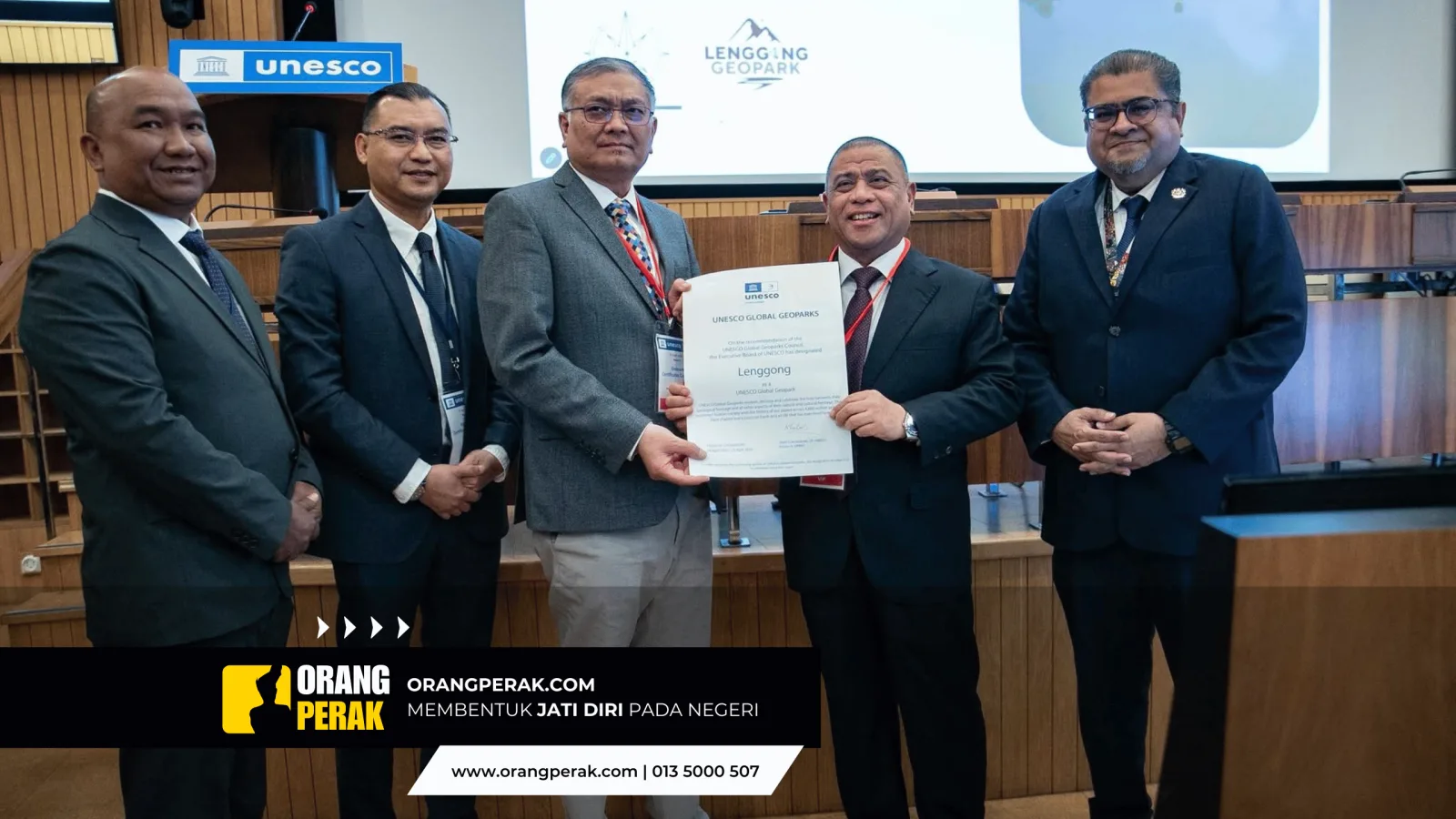
The Man from Bota: The Life Journey of the First Malay to Become an Estate Manager
Ahmad Zakaria bin Abu Kassim was born in Teluk Kepayang, Bota on September 7, 1928. He was the fifth of seven siblings and was a child who had a great passion for reading and writing.
He was an individual who refused to give up regardless of the challenges and trials that came his way. Ahmad Zakaria bin Abu Kassim received his early education at the Teluk Kepayang Malay School in 1938, from grade 1 until he completed grade 5. From a young age, he and his family faced various trials and hardships in their lives. One that could never be forgotten was the loss of his eldest brother, who was executed by the Japanese army. He also endured a very painful life, including shortages of food, clothing, and basic necessities due to the turmoil of the war during the Japanese occupation of Malaya. However, the emotional and physical challenges of that time did not break his spirit to continue his education at the Teluk Bakong Malay School from grade 6 to grade 7. Even so, his studies in grade 7 had to be cut short because the situation in the local area became increasingly chaotic and untenable. After the Japanese occupation ended, in 1945, he decided to resume his studies at the Silibin Malay School in Ipoh and later at Anderson School, starting from "Special Malay Class 1 and 2" and moving directly to "Standard 4" through "Standard 7".
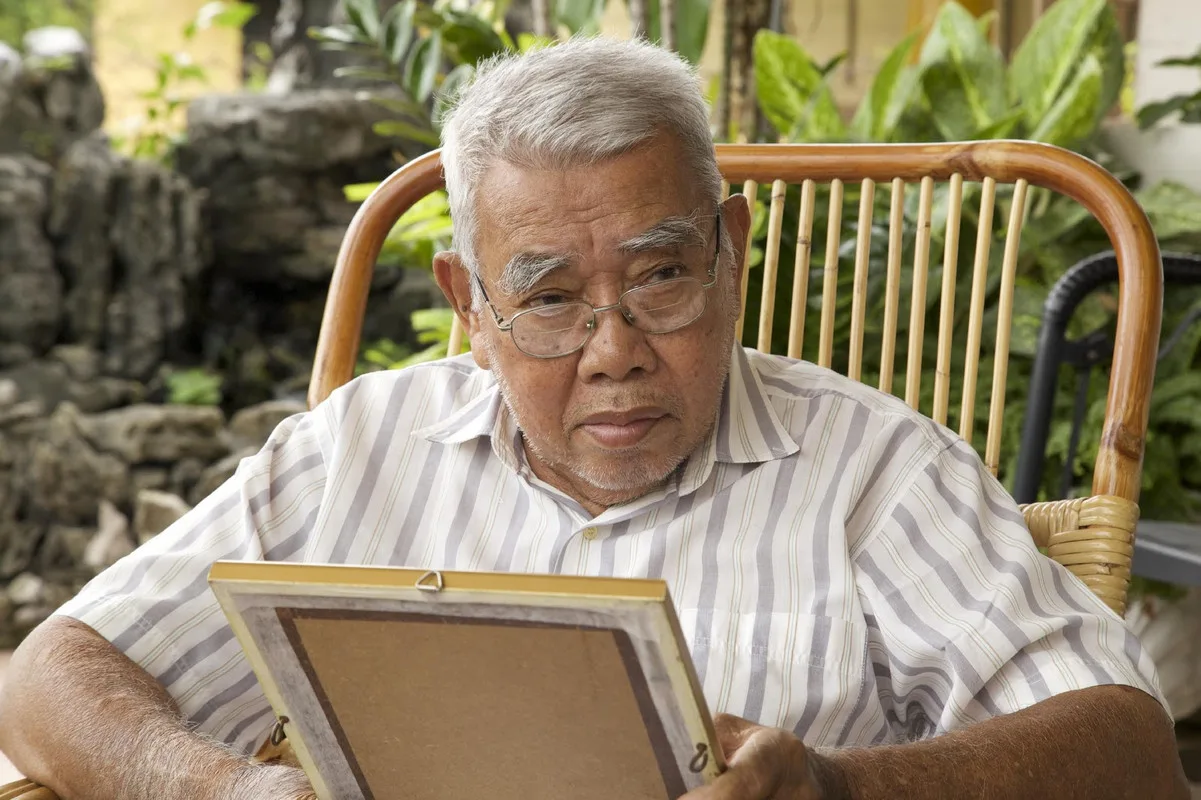
While studying at Anderson School, Ahmad Zakaria bin Abu Kassim faced financial difficulties in paying his hostel fees and was eventually expelled from the hostel. Because of this, he decided to stay in a cow shed located near the school and persistently continued his studies at Anderson School without tiring. Every weekend and school holiday, Ahmad Zakaria bin Abu Kassim began doing odd jobs such as working as a golf caddy and a tennis ball boy at golf and tennis clubs to earn money to pay for his school needs. In March 1953, Ahmad Zakaria bin Abu Kassim continued his studies at RIDA (now known as MARA) in the "Rubber Estate and Factory and Estate Management" course. He was among the first trainees in that field. Other trainees included Haji Mohd Nor, Abdul Majid Kadir, Abdul Rahim, and Tan Sri Nayan Ariffin. They were placed at two training centers located at Telok Pengerang Estate and Telok Sengat Estate in Johor before being transferred to RRIM Sungai Buloh and Jalan Ampang, Kuala Lumpur.
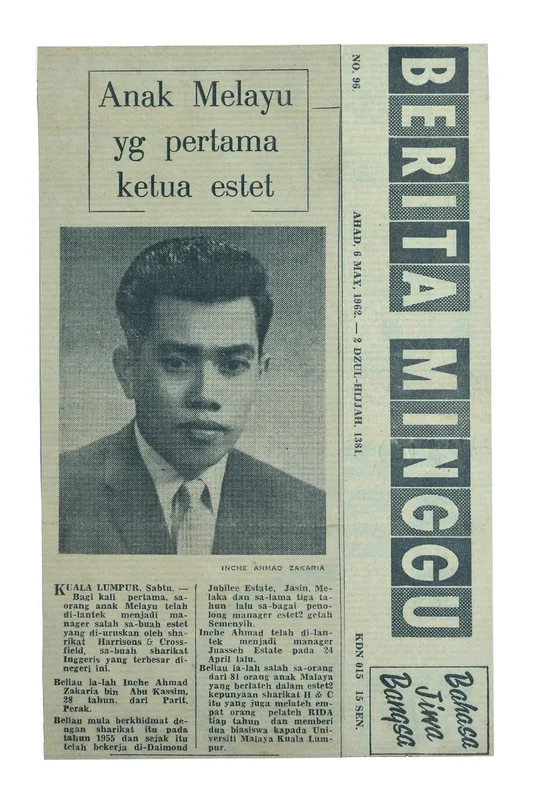
The training conditions at that time were very challenging because both estates were located near the hideouts of communist terrorists who were rampant. Often, the estates there received uninvited visits and attacks from communist terrorists. However, these obstacles did not break his spirit to continue the training, even though several other trainees withdrew from the program. After completing his training, he was offered a position as a "Trainee Supervisor" at Braemar Estate in 1955. That was the beginning of his journey toward his appointment as the first Malay to be named an estate manager under the Harrisons and Crosfield company in 1962. Ahmad Zakaria bin Abu Kassim was entrusted with managing Juasseh Estate in Negeri Sembilan before moving to other estates. Among the estates he served were Braemar Estate, Cluny Estate, Trolak Estate, Sungai Bruas Estate, Sogomana Estate, Diamond Jubilee Estate, Juasseh Estate, and many more. In 1972, Sultan Idris II (the 33rd Sultan of Perak) recognized his contributions to the plantation sector with the Pingat Jaksa Kebaktian (PJK) medal, alongside 146 other recipients in various fields. He decided to retire early from the plantation world in October 1982. Due to certain reasons, Harrisons Malaysian Plantation Berhad requested that his retirement date be extended until the end of 1984.
After deep consideration, he agreed to extend his service as requested, and he officially retired on September 7, 1983. On January 13, 2018, at the age of 90, Ahmad Zakaria bin Abu Kassim took his last breath at his residence in Kampung Sungai Rokam, Ipoh. Article contribution from the late's grandson,
Hafiz Hisan
.