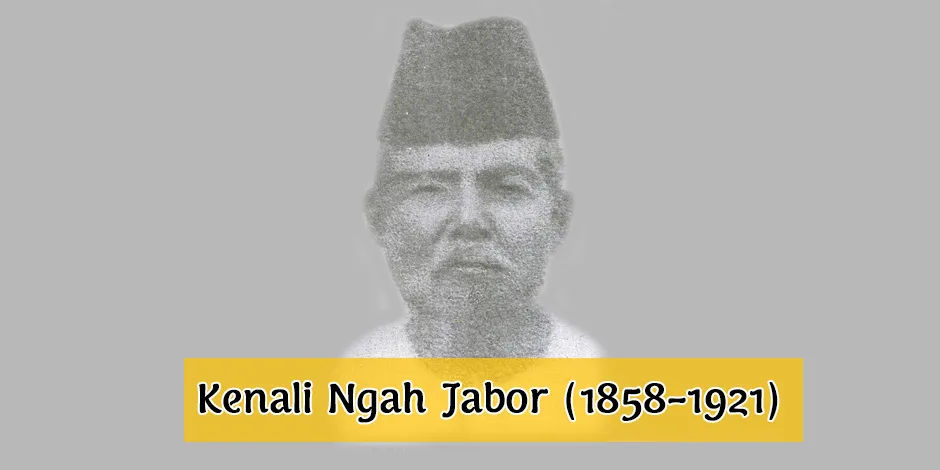
Ngah Jabor, Founder of the Kampar District
Ngah Jabor, whose real name was Mohammad Jabar bin Bardot and who was also known by the title Imam Prang Jabor, was a key figure during the British colonial period in Perak, particularly during the timeline of resistance against
the first British Resident of Perak, J.W.W. Birch
. He was a right-hand man to the renowned Perak warrior, Dato
Maharaja Lela
, whose real name was Pandak Lam. Ngah Jabor was also the founder of the Kampar district, Perak.
He was a foster brother to the 28th Sultan of Perak, Sultan Idris Murshidul Aadzam Shah ibni al-Marhum Raja Bendahara Alang Iskandar. Raja Idris and Ngah Jabor shared a foster-brother relationship because, as a child, Raja Idris was nursed by Ngah Jabor's mother, Uda Punta; it was common practice for the Royal family to have their children nursed by others, especially those from noble families. It is mentioned in the book written by Hashim Sam titled 'Orang Biasa Diraja, Hayat dan Zaman Imam Perang Jabor (1858-1921)' that it shows the genealogical relationship between Pandak Lam (Dato
Maharaja Lela
) and Ngah Jabor. According to the records of historian Prof C.N. Parkinson, Ngah Jabor was actually the younger brother of Pandak Lam, while historian Buyong Adil stated that Ngah Jabor was a relative of Pandak Lam. Both names are linked to another name, Zainal Abidin, who is shown in the genealogical chart as the father of both Pandak Lam and Ngah Jabor. In another genealogy, the relationship between Pandak Lam, or Dato
Maharaja Lela
, and Ngah Jabor is shown without linking them to a common name that would signify the same father. Pandak Lam's lineage above him is not shown, meaning his father is unknown, while Ngah Jabor's lineage shows his father was named Bardot. However, both names originate from the same root, meeting at their ancestor Daeng Selili, which indicates their relationship within a large Bugis family. The two genealogies mentioned above appear to contradict each other.
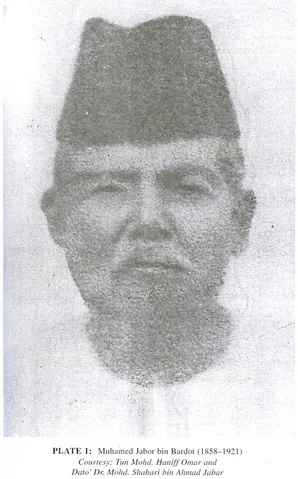
At a young age, approximately 17, Ngah Jabor was arrested by the British on suspicion of being involved in the murder of
J.W.W. Birch
. In fact, official British records clearly show that Ngah Jabor and his associates, such as their leader Dato
Maharaja Lela
, Pandak Indut, Panjang Bur, Kulup Ali, Dato Sagor, and Si Tuah, were accused of conspiring and abetting in the murder of the British Resident of Perak,
J.W.W. Birch
. The British Perak Court trial was held in Matang, Larut, from December 14, 1876, to December 22, 1876. It was also explained that Kulup Ali, Ngah Jabor, Pandak Indut, and Si Tuah had thrust spears at the bathing place of
J.W.W. Birch
. Ngah Jabor also admitted to killing
J.W.W. Birch
when asked personally by Dato
Maharaja Lela
. It is understood that Ngah Jabor, Kulup Ali, Si Tuah, and Panjang Bur, who admitted to being involved in the conspiracy to murder
J.W.W. Birch
, were sentenced to life imprisonment by the British Court in Perak on charges of abetting in the murder of
J.W.W. Birch
.
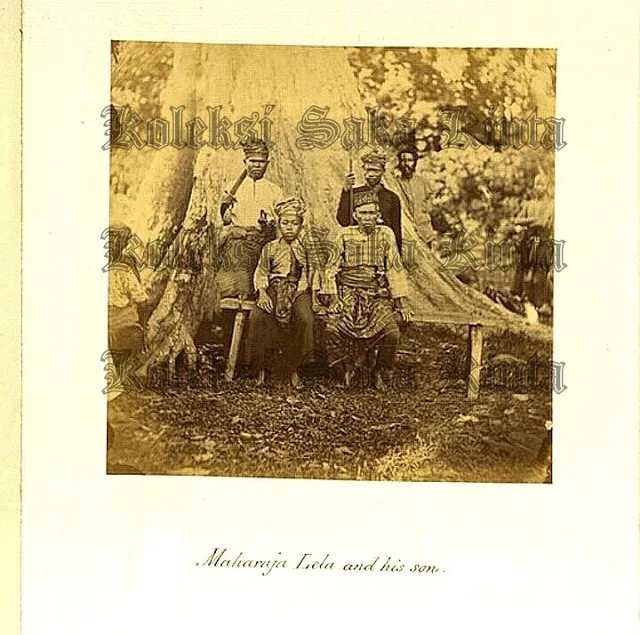
Meanwhile, Pandak Indut was found guilty and sentenced to death by hanging on May 20, 1876. On January 20, 1877,
Maharaja Lela
, Datuk Sagor, and Pandak Indut were also sentenced to death by hanging. However, there are rumors that some believe Ngah Jabor was quietly released from prison by Raja Idris when he became Sultan in 1887. This claim is further strengthened by information released by the Kampar District Council, which states, "Based on an article by Datuk Hashim bin Sam Abdul Latiff, the early settlement of Kampar has a connection to the murder of
J.W.W. Birch
as the British Resident in Perak, because Ngah Jabor, as an early pioneer of Kampar, was someone involved in the murder, along with others including
Maharaja Lela
, Datuk Sagor, Si Putum, and so on. However, Ngah Jabor escaped any punishment when Raja Idris (Dris), who later became the Sultan of Perak in 1887, became the judge presiding over those involved in the murder of
J.W.W. Birch
in 1876". Between 1876 and 1886, Ngah Jabor disappeared, and many assumed he had gone into seclusion to seek knowledge. This disappearance of Ngah Jabor is linked to the opening of Kampung Jabor, located in Kemaman, Terengganu. It is believed to be the place where Ngah Jabor isolated himself from the British. Ngah Jabor is said to have reappeared in Perak in 1894, but with a slightly different name, Mohamed Jabar.

This name began to appear when Kampar started to be explored for tin mining. Mohamed Jabar was the key figure who opened the town. He is said to have become a well-known wealthy man in the Kampar Valley. He is also said to have made a claim for the title of Dato Maharaja Lela, a title previously held by Pandak Lam. After Pandak Lam was executed, the title was not used by anyone. The claim was, however, rejected by Sultan Idris, who had a foster-brother relationship with him, on the grounds that the title would not be revived. Sultan Idris offered another position, the title of Dato Panglima Kampar, but it was politely declined by Mohamed Jabar. The claim was made by Mohamed Jabar as he was the only remaining figure after two others from Pasir Salak or Kampung Gajah, namely Pandak Lam and Ngah Kamdin (Dato Sagor), had been sentenced to death. Mohamed Jabar was said to be very fond of associating with the Ulama (religious scholars), and it is said that every year during the month of Ramadan, religious leaders and scholars from across the archipelago would visit his house to break their fast and perform Tarawih prayers together. Mohamed Jabar passed away in 1921 at the age of 63. Although he lived in Kampar, he was taken to be buried in Kampung Gajah, Perak, the place where he was raised. He owned hundreds of acres of land in several places within the state of Perak, but much of his land was reclaimed by the state authorities. What is interesting about Ngah Jabor's descendants is that the fourth
Inspector-General of Police of Malaysia, Tun Mohammed Hanif bin Omar
, is actually the grandson of Ngah Jabor.