Ipoh Tree Falls After 37 Years
The city of Ipoh gets its name from a tree. These trees produce a poisonous sap known as 'upa'. This poisonous sap from the tree has many uses; it was used by the Orang Asli community for hunting animals. The poisonous sap or 'upa' was coated onto the tips of blowpipes and also used to defend themselves and their families. This poison acts immediately and kills the target hit by the blowpipe. To avoid poisoning the hunter, the meat around the wound on the prey is cut away and discarded.
As we have previously mentioned in the article
Where Ipoh Got Its Name
, you can read about it by
clicking here
. Today, April 28, 2017, the lifespan of the Ipoh tree, planted by the seventh Menteri Besar of Perak, Datuk Sri Wan Mohamed Wan Teh, on January 18, 1980, has come to an end after standing tall for the past 37 years at that location.
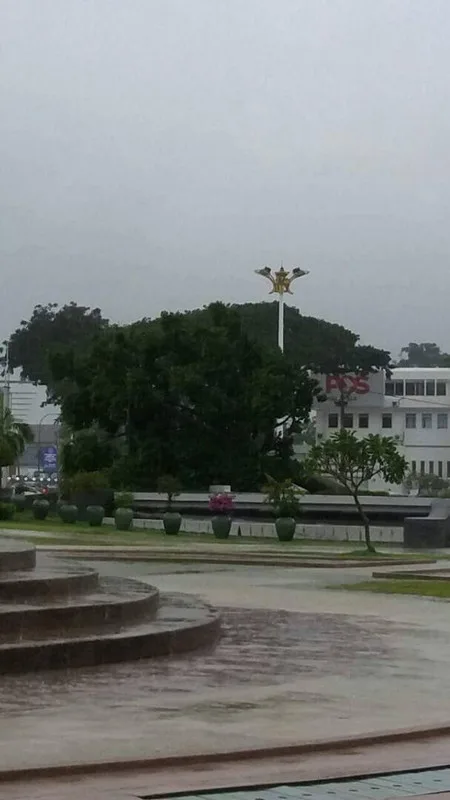
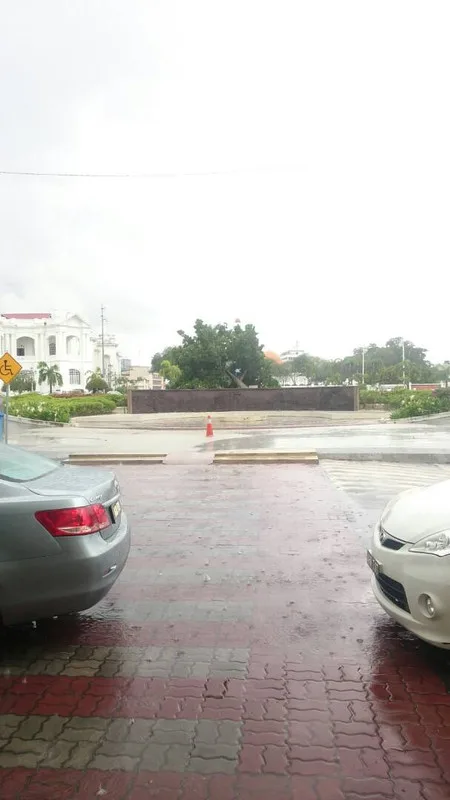
Heavy rain accompanied by strong winds since 3:30 PM today was the main factor for the Ipoh tree falling. For your information, this Ipoh tree stood over 50 meters tall. The tree served as a landmark for the city of Ipoh under the maintenance of the Ipoh City Council (MBI), located at the Station Square opposite the Town Hall. Besides this fallen Ipoh tree, several other incidents of fallen trees have been reported around the city, namely in Buntong and Silibin.
In today's storm, a tree also fell on Jalan Bidoh, Buntong, crushing two houses and power cables. Another tree fell on Jalan Silibin, Taman Malcop, crushing a car. Tree branch clearing work is currently underway in both areas, and no casualties were reported. Thus, a landmark representing the origin of Ipoh's name has fallen today, marking this event in the history of Perak.